नेपाल के मुस्तांग में 3,710 मीटर पर स्थित मुक्तिनाथ हिंदू और बौद्ध दोनों के लिए पवित्र है। यहाँ 108 जलधाराओं में स्नान से मुक्ति मानी जाती है, और ज्वाला माई मंदिर में पानी के ऊपर अग्नि जलती है।
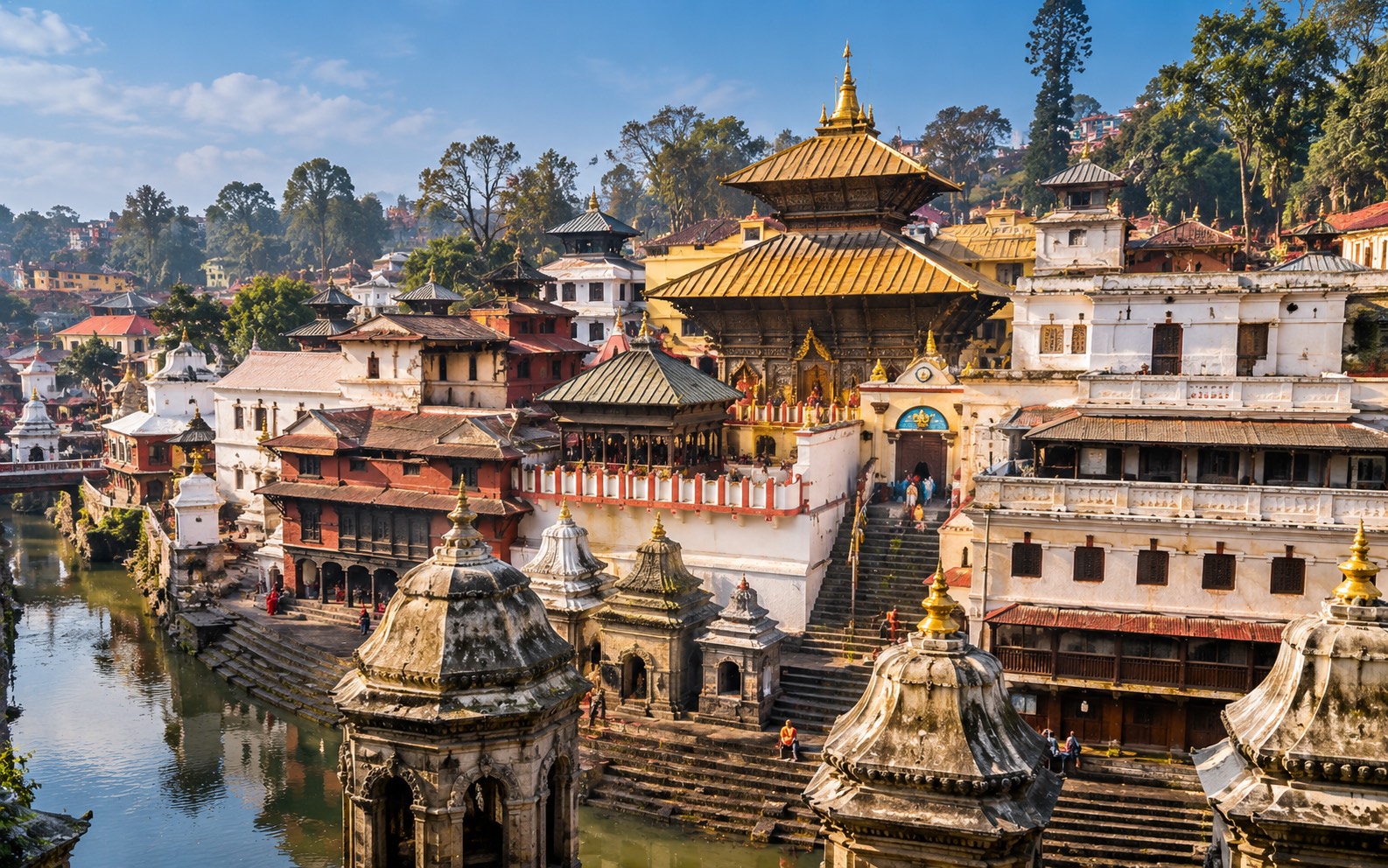
High in Nepal's Mustang region, at 3,710 metres, the small pagoda temple of Muktinath sits in a barren, windswept valley. Its name means "Lord of Liberation", and Hindus believe a visit here frees the soul from the cycle of birth and death.
A Divya Desam in the Himalaya
Muktinath is one of the 108 Divya Desams — the sacred Vishnu temples praised in the hymns of the Tamil Alvar saints — and one of only two outside India. For Buddhists it is Chumig Gyatsa, "hundred waters", a place where Guru Padmasambhava meditated. Nuns from the Buddhist tradition look after the temple, a rare example of two faiths sharing one shrine.
The 108 water spouts
Behind the temple, 108 bull-faced spouts pour ice-cold water from the mountains. Yatris run under all 108 — gasping in the freezing water — and then take a dip in two small ponds in front. Devotees believe this washes away the sins of a lifetime.
Fire on water
A short walk away is the Jwala Mai temple. Inside, small blue flames burn steadily at a spot where water also trickles from the rock. Devotees see the meeting of fire, water and earth here as a divine sign.
The flame at Jwala Mai has been burning on water for thousands of years by divine power.
The flames are fed by natural gas seeping from the ground, close to a small spring — a natural wonder that has been revered for centuries.
Shaligram stones
Below Muktinath flows the Kali Gandaki river, where black shaligram stones are found. These are fossils of ammonites — sea creatures from millions of years ago, when the Himalaya lay under the ocean. Hindus worship shaligrams as natural forms of Vishnu.
- Altitude
- 3,710 m
- Reach
- Fly Pokhara → Jomsom, then about 1.5 hours by jeep
- Best time
- March–June, September–November
- Documents
- Indians: passport or Voter ID
Questions
Why is Muktinath sacred to both Hindus and Buddhists?
Hindus worship Vishnu as Muktinath (a Divya Desam); Buddhists revere it as Chumig Gyatsa, linked to Guru Padmasambhava.
What are the 108 springs at Muktinath?
108 spouts pouring cold mountain water, under which pilgrims bathe for purification.
What are shaligram stones?
Ammonite fossils from the Kali Gandaki river, worshipped as natural forms of Vishnu.