महाभारत के युद्ध के बाद पांडव शिव जी से क्षमा माँगने निकले। शिव जी बैल का रूप लेकर छिप गए। भीम ने पहचान लिया, तो बैल धरती में समाने लगा — उसका कूबड़ केदारनाथ में रह गया। 2013 की बाढ़ में एक विशाल चट्टान — भीम शिला — ने मंदिर की रक्षा की।
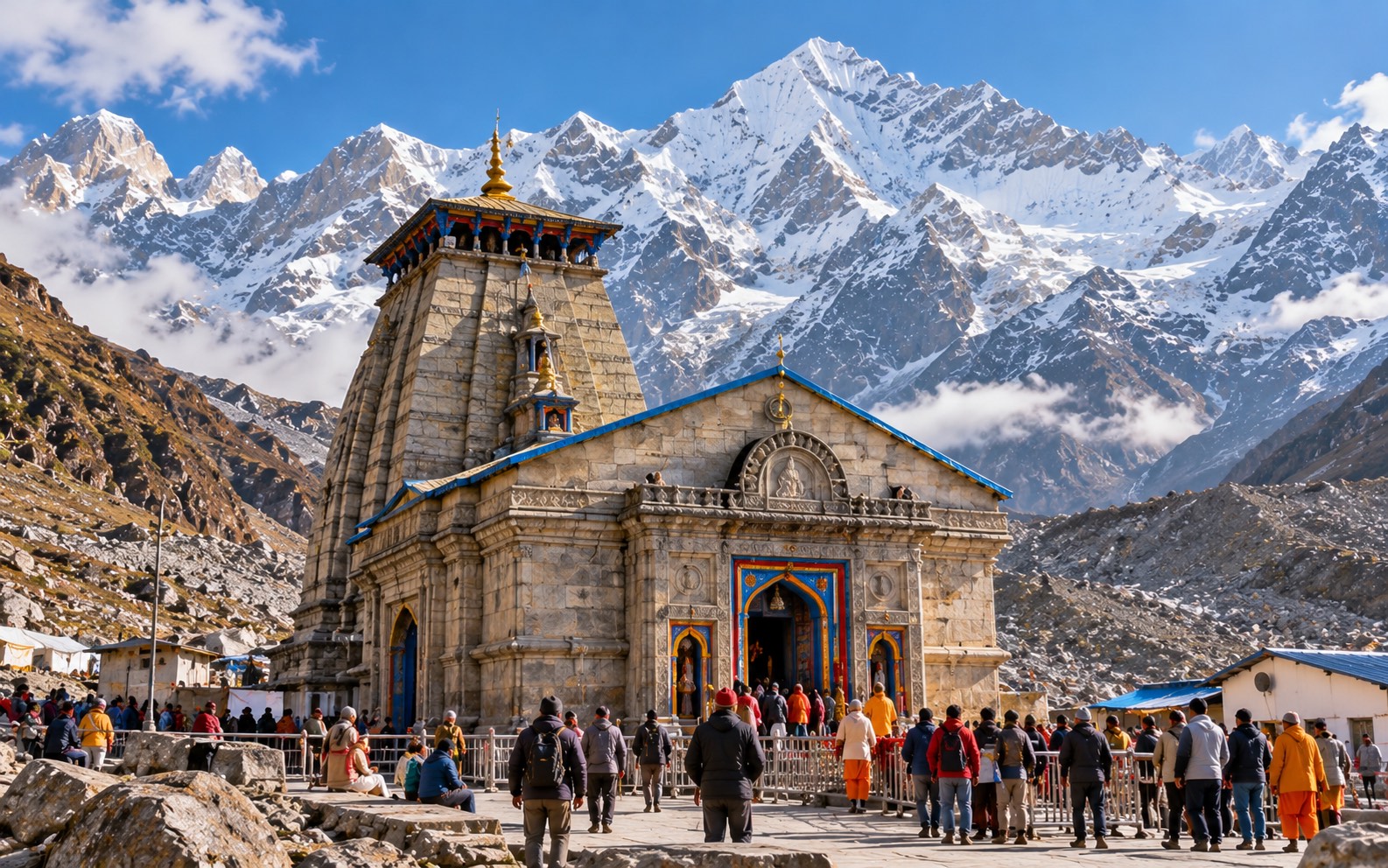
Kedarnath stands alone in a valley of snow, at 3,583 metres, built of huge grey stone slabs. It has survived avalanches, earthquakes and floods. The story of how Shiva came to live here begins after the Mahabharata war.
The Pandavas' search
After the war at Kurukshetra, the Pandavas wanted to be freed from the sin of killing their own relatives. They went looking for Bhagwan Shiva, but Shiva did not want to meet them so easily. He took the form of a bull and hid among a herd of cattle in the Garhwal hills.
Bhima recognised him. He stretched his legs across two hills so that all the cattle passed below — except one bull, which would not. As Bhima grabbed it, the bull began to sink into the earth. Only its hump remained above ground — and that hump is worshipped at Kedarnath as a triangular rock lingam.
The Panch Kedar
The legend says other parts of the divine bull appeared at four more places, together called the Panch Kedar:
- Kedarnath — the hump
- Tungnath — the arms (the highest Shiva temple in the world, about 3,680 m)
- Rudranath — the face
- Madhyamaheshwar — the navel
- Kalpeshwar — the hair
Many believe the head emerged at Pashupatinath in Nepal.
Adi Shankaracharya
The present temple is traditionally linked to Adi Shankaracharya, who revived the shrine in the 8th century. His samadhi is believed to be just behind the temple, where a new memorial and statue were unveiled in 2021.
The rock that saved the temple
On 16–17 June 2013, a cloudburst and glacial lake burst sent a wall of water and debris through Kedarnath. Thousands of lives were lost and the town was destroyed. But a huge boulder came to rest just behind the temple and split the flow of debris around it. The temple stood. Devotees named the rock Bhim Shila, and today they worship it too.
Baba Kedar himself protected his temple by placing the Bhim Shila in the path of the flood.
The boulder diverted the debris around the temple; the temple's massive stone walls and interlocked slabs also helped it survive. Kedarnath has since been rebuilt with new ghats, paths and flood protection.
- Altitude
- 3,583 m
- Trek
- About 16 km from Gaurikund, or helicopter from Phata / Sersi / Guptkashi
- Open
- Akshaya Tritiya (Apr–May) to Bhai Dooj (Oct–Nov)
- Winter seat
- Omkareshwar temple, Ukhimath
Questions
Why is the Kedarnath lingam triangular?
According to the legend it is the hump of the bull form that Shiva took to hide from the Pandavas.
What is Bhim Shila?
The large boulder that stopped behind Kedarnath temple during the 2013 flood and diverted the debris around it.
What are the Panch Kedar?
Kedarnath, Tungnath, Rudranath, Madhyamaheshwar and Kalpeshwar.