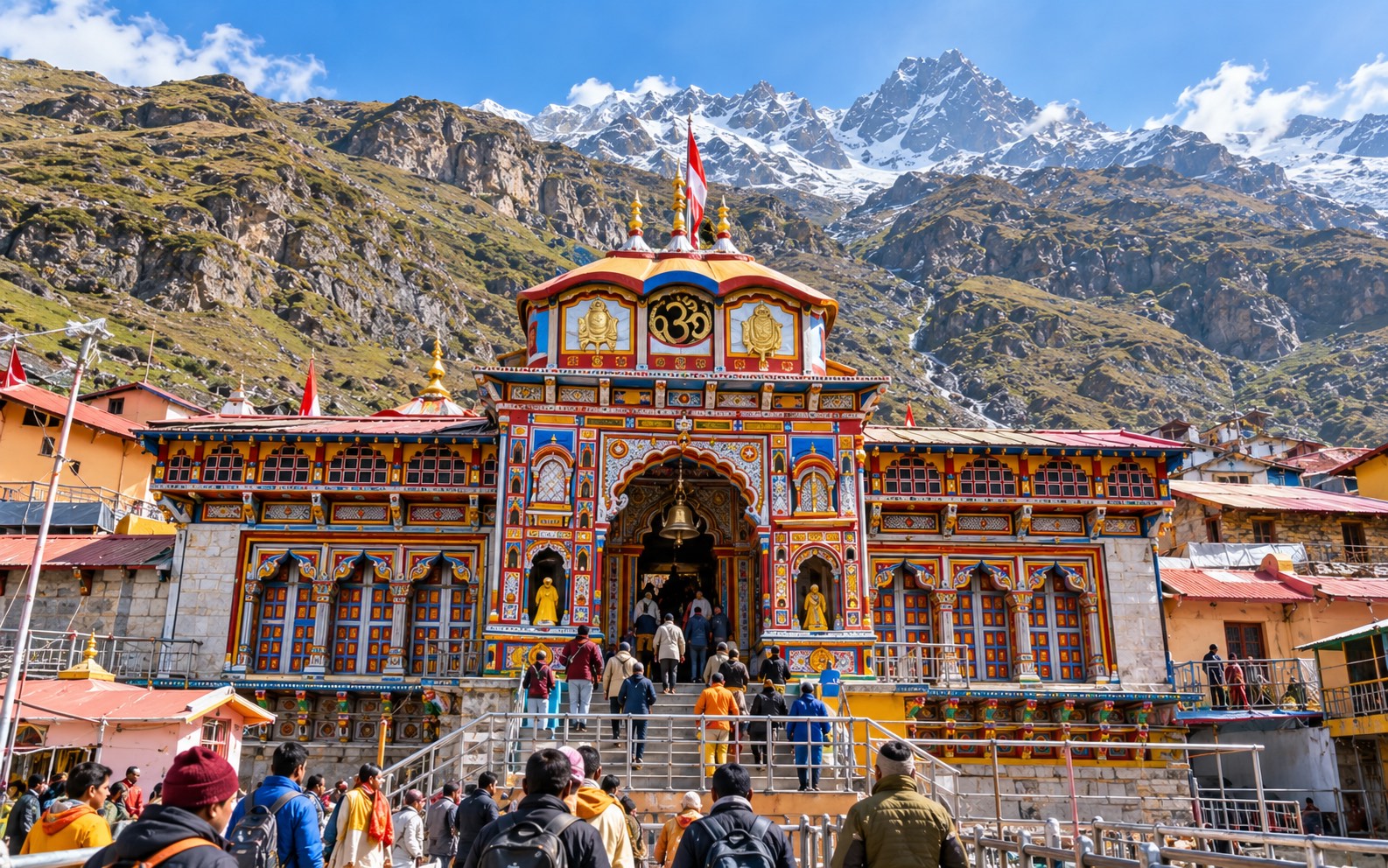
मान्यता है कि भगवान विष्णु यहाँ तपस्या कर रहे थे तो माता लक्ष्मी ने बेर (बदरी) के पेड़ का रूप लेकर उन्हें धूप और बर्फ़ से बचाया। इसलिए वे बद्रीनाथ कहलाए। सर्दियों में मंदिर बंद होने पर भी अखंड ज्योति छह महीने जलती रहती है।
Between the Nar and Narayan mountains, on the banks of the Alaknanda, stands Badrinath — the holiest of the four Char Dham of India and of Uttarakhand's Char Dham. Here Bhagwan Vishnu is worshipped as Badri Vishal.
Why "Badrinath"?
The story goes that Vishnu sat here in deep meditation, unaware of the harsh cold. To protect him, Mata Lakshmi took the form of a badri (wild jujube) tree and sheltered him from snow and sun for ages. When Vishnu opened his eyes, he named the place after her devotion: Badrinath — Lord of the Badri.
Nar and Narayan
The two mountains on either side of the town are named after the sages Nar and Narayan, believed to be forms of Arjuna and Krishna in an earlier age, who did tapasya here.
The murti from Narad Kund
Tradition says Adi Shankaracharya found the black shaligram stone murti of Badri Narayan in the Narad Kund below the temple and re-established worship in the 8th century. Since then, the chief priest — the Rawal — has been a Namboodiri Brahmin from Kerala, Shankaracharya's home, a beautiful link between the north and south of India.
The akhand jyoti
When the temple closes in winter (around Diwali), the priests light a ghee lamp and shut the doors. The deity's worship moves to Pandukeshwar and Joshimath. Six months later, when the doors open again in spring, devotees say the lamp is still burning — and its first darshan is considered especially blessed.
Devotees believe that during the six closed months, devas and Narad Muni themselves continue the worship.
The temple is snowed in and closed every winter; the utsav murti is worshipped at Pandukeshwar and Joshimath. The akhand jyoti is lit before closing, and its darshan on reopening is a cherished tradition.
Tapt Kund and Mana
Just below the temple, the hot spring of Tapt Kund gives yatris a warm bath in freezing weather. Three km away is Mana, known as the first village of India, with Vyas Gufa — where Ved Vyas is said to have dictated the Mahabharata to Ganesh ji — and Bheem Pul, a natural rock bridge over the Saraswati river.
- Altitude
- 3,300 m
- Open
- Late April / May to around Diwali
- By road
- About 320 km from Rishikesh
- Read next
- Char Dham Yatra guide
Questions
Why is the Badrinath priest from Kerala?
By tradition started with Adi Shankaracharya, the Rawal (chief priest) is a Namboodiri Brahmin from Kerala.
Where is Badrinath worshipped in winter?
At Pandukeshwar and Joshimath, when the temple is closed by snow.
What is Tapt Kund?
A natural hot spring below Badrinath temple where yatris bathe before darshan.